
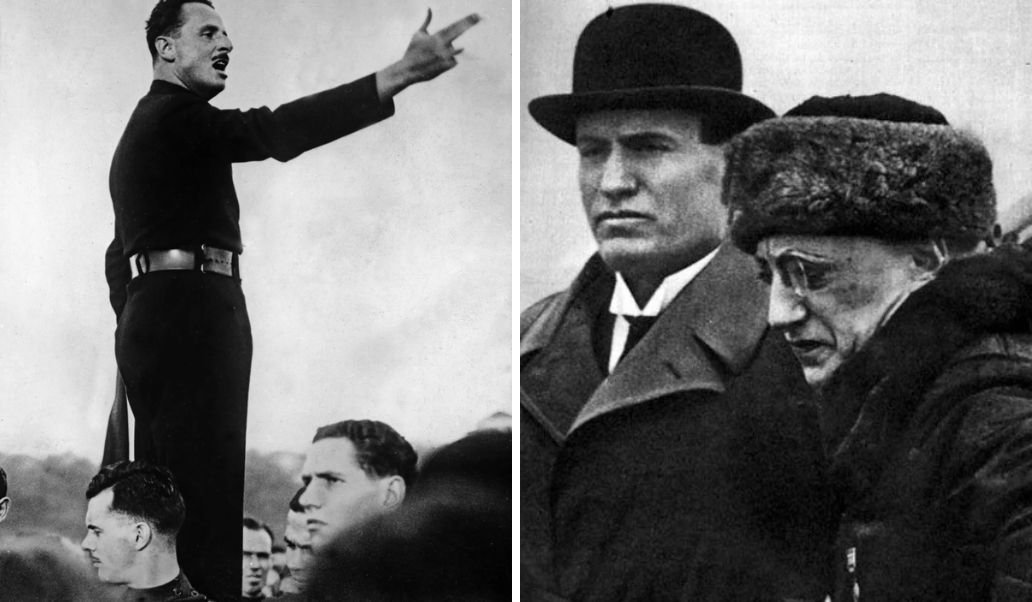
Fascisterne is a Danish term that means “the fascists” in English. It refers to people who support fascism, a political belief linked to extreme nationalism, strong leaders, and strict control over society. Fascism became especially powerful in Europe during the early 20th century, most notably in Italy under Benito Mussolini and Germany under Adolf Hitler. Understanding its main features helps us learn how these movements gained power and changed the world.
Fascism is more than a political system built around one leader. It can affect laws, schools, news, public life, and the rights of ordinary people. Fascist movements often promise national strength, unity, and a better future. However, they may use fear, violence, and false claims to gain support. By studying the seven key characteristics of Fascisterne, readers can better understand the warning signs of authoritarian rule and the value of freedom, fairness, and democratic rights.
Quick Information Table
| Detail | Information |
|---|---|
| Main Term | Fascisterne |
| English Meaning | The fascists |
| Political Ideology | Fascism |
| Historical Period | Early 20th century |
| Country of Origin | Italy |
| Italian Leader | Benito Mussolini |
| German Nazi Leader | Adolf Hitler |
| Core Belief | Extreme nationalism |
| Political Structure | Authoritarian rule |
| Common Method | Political repression |
| Public Message | National revival |
| Democratic View | Anti-democratic |
| Historical Impact | World War II |
Extreme Nationalism and National Pride
One of the main characteristics of Fascisterne is extreme nationalism. Fascist movements often claim that their nation is greater than others and must regain its former strength. They use national flags, historic stories, public events, and emotional speeches to build a shared identity. While love for one’s country is common in many political traditions, fascist nationalism goes further by treating national loyalty as more important than individual rights and equal treatment.
This belief can divide people into those considered true members of the nation and those viewed as outsiders or enemies. Minority groups, immigrants, and political opponents may be blamed for national problems. In fascist Italy, Mussolini promoted the idea of restoring Roman greatness. Nazi Germany used racist ideas to claim that some people were superior to others. These examples show how extreme nationalism can encourage hatred instead of healthy national pride.
Strong Leaders and Authoritarian Rule
A second important characteristic is the demand for a powerful leader who appears able to solve every national problem. Fascist movements often present their leaders as brave, wise, and uniquely capable of saving the country. Supporters may be encouraged to trust the leader rather than question decisions, examine evidence, or demand public accountability. This creates a political culture in which personal loyalty becomes more important than fair laws and open debate.
Under Mussolini, Italy became a dictatorship that greatly restricted political opposition. Hitler’s government in Germany also destroyed democratic checks on power after the Nazis took control in 1933. Independent institutions were weakened, opponents were targeted, and authority became concentrated in the ruling leadership. A strong government is not automatically fascist, but unchecked power, forced loyalty, and the removal of political freedoms are serious warning signs of authoritarian rule.
Suppression of Opposition and Free Speech
Fascist movements often treat political disagreement as a threat to national unity. Instead of accepting criticism as part of public life, they may describe opponents as traitors, enemies, or people working against the country. Once in power, fascist governments can restrict protests, weaken opposition parties, and punish people who challenge official ideas. Such actions make it harder for citizens to question leaders or demand changes through peaceful political methods.
Freedom of speech and a free press help people discover mistakes, expose abuse, and make informed choices. Fascist governments have often tried to control newspapers, radio, public meetings, and other channels of communication. In Nazi Germany, independent political opposition was crushed, and many opponents faced imprisonment or worse. These historical examples reveal why open debate matters. When people cannot safely disagree with their leaders, harmful policies may continue without meaningful public challenge.
Propaganda and Control of Information
Propaganda is another key characteristic of Fascisterne. It involves spreading messages designed to influence people’s beliefs and emotions, often by presenting a one-sided or misleading picture of events. Fascist movements have used speeches, posters, newspapers, films, rallies, and symbols to build support. Their messages may promise national renewal, praise the leader, and blame certain groups for social or economic problems. Repeated slogans can make simple answers seem more convincing than complex facts.
Propaganda becomes especially dangerous when people cannot access independent information. Nazi Germany developed a powerful propaganda system under Joseph Goebbels, who led the regime’s propaganda ministry. The government used media to promote Nazi beliefs, glorify Hitler, spread antisemitism, and shape public opinion. Today, people can learn from this history by checking sources, comparing reports, and asking who benefits from a particular message. These habits help people recognize manipulation and make better-informed decisions.
Militarism and the Glorification of Violence
Fascist movements often praise military strength, discipline, obedience, and sacrifice for the nation. They may present conflict as a natural way to prove national greatness or regain lost power. Uniforms, marches, weapons, and military symbols can become central to public life. Although countries may maintain armed forces for defense, fascist militarism places unusual value on force and may portray peaceful compromise as weakness or an obstacle to national success.
Violence can also be used against people within the country. Fascist movements have relied on intimidation, street attacks, and organized groups to silence rivals and frighten critics. Mussolini’s Blackshirts used violence against political opponents, while Nazi paramilitary organizations helped intimidate opponents and enforce the movement’s control. These examples show that political violence is not simply a matter of military policy. It can become a way to gain power, control public life, and make people afraid to speak openly.
Discrimination and the Search for Scapegoats
Another defining feature of many fascist movements is the use of scapegoats. A scapegoat is a person or group unfairly blamed for problems caused by many different factors. Fascist leaders may claim that a nation is suffering because of minorities, immigrants, religious groups, or political opponents. These claims can turn public anger toward vulnerable people rather than encouraging careful discussion of economic, social, or political problems.
Nazi Germany provides one of the clearest examples of this danger. The Nazi regime spread extreme antisemitism, stripped Jewish people of rights, and carried out the Holocaust, in which six million Jews were murdered. Other groups were also persecuted and murdered by the regime. This history demonstrates the devastating results of state-sponsored hatred. Discrimination should not be dismissed as harmless political speech when it is used to deny people’s rights, justify exclusion, or encourage violence against them.
Control Over Society and Individual Freedom
Fascist movements often seek influence over many parts of public life, not only government offices. They may try to shape education, culture, youth groups, public events, and the way citizens discuss national identity. The purpose is to encourage obedience and make the ruling ideology seem natural or unquestionable. People may face pressure to follow official beliefs, avoid criticism, and place the interests defined by the state above their own choices and rights.
In fascist Italy and Nazi Germany, the state worked to influence schools, youth organizations, cultural life, and public communication. Independent groups and political organizations faced serious restrictions, while loyalty to the regime was promoted. However, the level and form of control differed between countries and changed over time. Studying these systems helps explain why personal freedom requires more than private choices. It also depends on independent institutions, equal protection under the law, and the ability to organize without fear.
Why Did Fascist Movements Gain Support?
Fascist movements did not rise in a vacuum. After the First World War, parts of Europe faced political unrest, economic hardship, social conflict, and fear of revolution. Some people felt that existing leaders had failed to protect their interests or restore national pride. Fascist leaders used these concerns to present themselves as defenders of order and strength. Their promises could attract people who wanted quick solutions to difficult problems.
However, public support did not come from one cause alone. Some people supported fascist movements because of nationalism, fear of communism, personal ambition, or hopes for economic and social change. Others were pressured into obedience, while many resisted the regimes and suffered for doing so. Understanding these different experiences helps avoid the false idea that an entire population held the same beliefs. It also shows how crises can create opportunities for leaders who promise certainty while weakening democratic safeguards.
How Can People Recognize Fascist Warning Signs?
Recognizing fascist tendencies requires attention to political actions, not just labels or slogans. A movement may use patriotic language without being fascist, and a government may make unpopular decisions without becoming a fascist regime. The more useful approach is to examine whether leaders reject democratic limits, encourage political violence, attack minority groups, and seek control over independent institutions. History offers a guide, but each modern situation should be assessed carefully.
Some warning signs deserve particular attention:
- Attacks on democracy: Leaders try to weaken elections, courts, or legal checks on power.
- Blind loyalty: Supporters are told that questioning the leader is equal to betraying the nation.
- Scapegoating: Minority groups are blamed for complex national problems.
- Media control: Independent journalists face threats, censorship, or punishment.
- Political violence: Threats and attacks are excused when used against opponents.
- Forced conformity: People face pressure to hide their views or abandon their rights.
One sign alone does not prove that a movement is fascist. Looking at the full pattern, the historical context, and the evidence is essential.
The Lasting Impact of Fascism on World History
Fascism changed the course of world history, particularly through the actions of Mussolini’s Italy and Hitler’s Germany. Nazi expansion in Europe and Germany’s invasion of Poland in September 1939 helped bring about the Second World War in Europe. The war caused enormous loss of life, widespread destruction, and lasting social change. Nazi rule also led to the Holocaust, one of history’s most devastating examples of organized, state-sponsored mass murder.
The end of the Second World War did not erase the ideas that had supported fascist regimes. Far-right and neo-fascist movements have appeared in different countries and periods, although their beliefs and goals vary. Historians continue to study fascism to understand how democratic systems can collapse and how propaganda, hatred, and unchecked power can affect society. Remembering this past is not only about studying old events. It is also about protecting human rights and learning from the choices that shaped them.
Final Thoughts
Fascisterne, meaning “the fascists,” is a term connected to a political ideology that has had a deep and often tragic impact on history. Its common characteristics include extreme nationalism, authoritarian leadership, the suppression of opposition, propaganda, militarism, discrimination, and attempts to control society. These features help explain how fascist movements have gained support and how their rule has harmed democratic institutions and vulnerable communities.
Learning about fascism is important because history can help people recognize dangerous political patterns before they cause greater harm. Citizens can support healthier societies by protecting free speech, respecting different communities, checking information, and holding leaders accountable. No country or political movement should be judged by a single slogan alone. Careful study of its actions, beliefs, and treatment of people offers a stronger basis for understanding the truth.
(FAQs)
1. What does Fascisterne mean?
Fascisterne is a Danish word that translates to “the fascists” in English. It refers to people who support or belong to a fascist movement. Fascism is an authoritarian political ideology commonly linked to extreme nationalism, strong centralized leadership, hostility toward political opposition, and the restriction of democratic freedoms. The exact meaning depends on the historical or political context in which the term is used.
2. What are the seven key characteristics of fascism?
The seven characteristics discussed in this article are extreme nationalism, authoritarian leadership, suppression of opposition, propaganda, militarism, discrimination, and control over society. These features often work together to strengthen a ruling movement and weaken democratic freedoms. Not every historical regime displayed them in exactly the same way, so historians consider the wider political context when deciding whether a movement should be described as fascist.
3. Who were the main fascist leaders in history?
Benito Mussolini was the leader of Fascist Italy and became prime minister in 1922 before establishing a dictatorship. Adolf Hitler led Nazi Germany after becoming chancellor in 1933. Their regimes shared authoritarian rule, extreme nationalism, political repression, and the use of propaganda, but Nazism also placed racial ideology and antisemitism at the center of its beliefs and policies. Both regimes played major roles in the history of the Second World War.
4. How did fascism affect ordinary people?
Fascism affected ordinary people through political repression, censorship, discrimination, propaganda, and pressure to show loyalty to the ruling regime. People who opposed the government could face threats, arrest, or imprisonment. Minority groups suffered especially severe persecution under Nazi rule. Experiences differed according to a person’s location, identity, beliefs, and position in society, but fascist systems generally reduced political freedom and made independent opposition dangerous.
5. Why is it important to study Fascisterne today?
Studying Fascisterne helps people understand how authoritarian movements can use fear, national pride, propaganda, and scapegoating to gain support. Historical knowledge can help citizens recognize attacks on democratic institutions and the rights of vulnerable groups. It also encourages critical thinking, careful research, and respect for different communities. Studying fascism does not mean treating every modern political disagreement as fascism; it means using clear definitions and historical evidence to assess political movements fairly.
Read More Inspiring Stories: The Magazine Net